In an era characterized by vast amounts of data, artificial intelligence (AI) has emerged as a powerful tool for making sense of the digital landscape. One of the most compelling applications of AI is in anomaly detection. This technology is revolutionizing industries ranging from cybersecurity to healthcare, offering an unparalleled ability to identify unusual patterns and potential threats. In this article, we’ll explore the role of AI in anomaly detection, its applications, and the impact it is having on various sectors.
Understanding Anomaly Detection
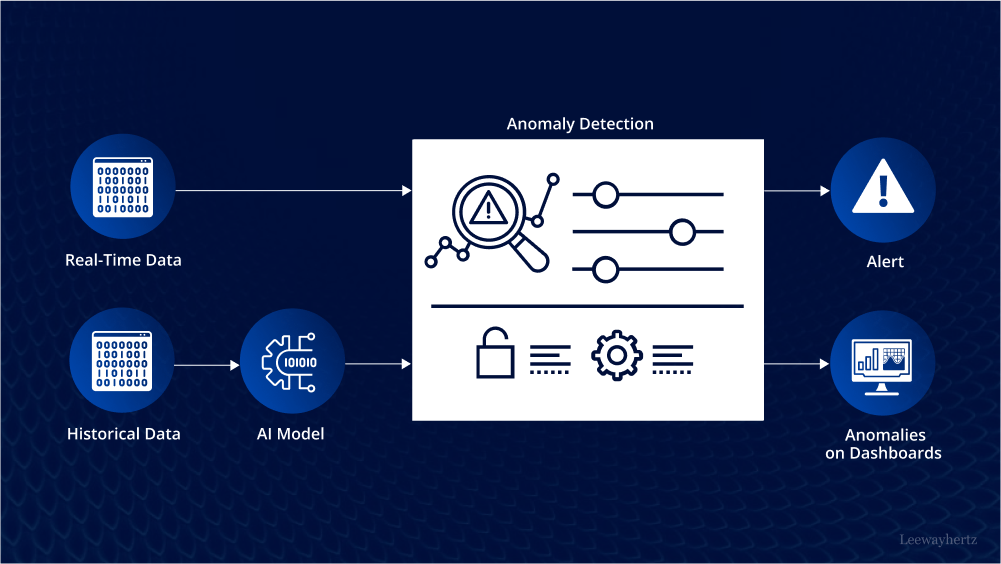
Anomaly detection is the process of identifying patterns or data points that deviate significantly from the norm within a given dataset. These anomalies can represent either unexpected threats or valuable insights, depending on the context. Traditionally, rule-based systems and statistical methods were used for anomaly detection. However, these approaches have limitations when it comes to handling complex, dynamic data.
AI-driven anomaly detection employs machine learning algorithms to automatically learn patterns and deviations from large datasets. This approach offers several advantages, including the ability to adapt to changing conditions, uncover subtle anomalies, and reduce false positives.
Applications in Cybersecurity
One of the most critical areas where AI in anomaly detection is making a substantial impact is cybersecurity. With the increasing frequency and sophistication of cyberattacks, traditional signature-based detection methods are no longer sufficient. AI-powered anomaly detection systems can analyze network traffic, user behavior, and system logs in real-time to identify anomalies that may signal a cyber threat.
These systems can detect not only known attack patterns but also novel, previously unseen threats. By continuously learning and adapting, AI can stay one step ahead of cybercriminals, enhancing the security posture of organizations worldwide.
Enhancing Fraud Detection
Financial institutions have also embraced AI in anomaly detection to combat fraudulent activities. Credit card companies, for example, use AI algorithms to monitor transactions and identify unusual spending patterns that may indicate fraud. Machine learning models can recognize anomalies by comparing a user’s typical behavior, such as location and spending habits, with the current transaction.
The result is a more effective and efficient fraud detection system that minimizes false alarms and improves customer experience. Moreover, AI can help identify emerging fraud patterns, providing financial institutions with insights to develop better prevention strategies.
Healthcare and Anomaly Detection
In healthcare, AI-driven anomaly detection is a game-changer. It can help identify abnormal patient data, such as vital signs or lab results, which may indicate a severe medical condition. For instance, AI can analyze electronic health records to detect anomalies that suggest a patient’s deteriorating health or an adverse drug reaction.
Early detection of anomalies in healthcare can save lives, reduce hospitalization costs, and improve patient outcomes. Additionally, AI can assist in medical imaging by spotting anomalies in X-rays, MRIs, and CT scans, aiding radiologists in making more accurate diagnoses.
Manufacturing and Quality Control
Manufacturers are using AI in anomaly detection to enhance product quality and prevent defects. By analyzing data from sensors, cameras, and production processes, AI can identify anomalies in real-time. This allows for immediate intervention to correct issues, reducing product defects and waste.
Furthermore, AI can predict equipment failures by detecting anomalies in machinery performance data, enabling proactive maintenance. This predictive approach minimizes downtime and maximizes operational efficiency, ultimately improving the bottom line for manufacturing companies.
Challenges and Ethical Considerations
While AI in anomaly detection offers remarkable benefits, it also presents challenges and ethical considerations. The reliability of AI models is contingent on the quality and representativeness of the data they are trained on. Biased or incomplete data can lead to skewed results and missed anomalies.
Moreover, there are privacy concerns when collecting and analyzing personal data to detect anomalies, particularly in healthcare and finance. Ensuring the responsible and ethical use of AI in these domains is paramount.
Conclusion
AI in anomaly detection is reshaping how organizations operate and protect their assets. Its applications span across diverse sectors, from cybersecurity to healthcare and manufacturing. By leveraging machine learning and data analysis, AI-powered systems can detect anomalies in real-time, enhancing security, quality control, and patient care.
However, it is crucial to address challenges such as data quality, bias, and privacy to ensure that AI-driven anomaly detection remains a reliable and ethical tool. As technology continues to advance, we can expect AI to play an even more significant role in identifying and mitigating anomalies, contributing to a safer, more efficient, and innovative world.
 AI Tech